
Contact Us
Welcome to contact Hangzhou Zansong Digital Co., Ltd.
WHAT IS THE DSP CHIP IN PORTABLE SPEAKERS AND SOUND CARDS? TIPS FOR PREVENTING FEEDBACK AND OPTIMIZING VOCALS WITH ZANSONG.
Have you ever found yourself in an awkward or comical situation—perhaps while livestreaming a sales session in Ho Chi Minh City and seeing orders pour in, or happily singing karaoke with family in Hanoi—only for the microphone to suddenly emit a piercing, distorted screech or feedback? Or have you struggled to belt out a song, yet the sound coming through the speakers still turned out thin, dry, and lacking warmth?
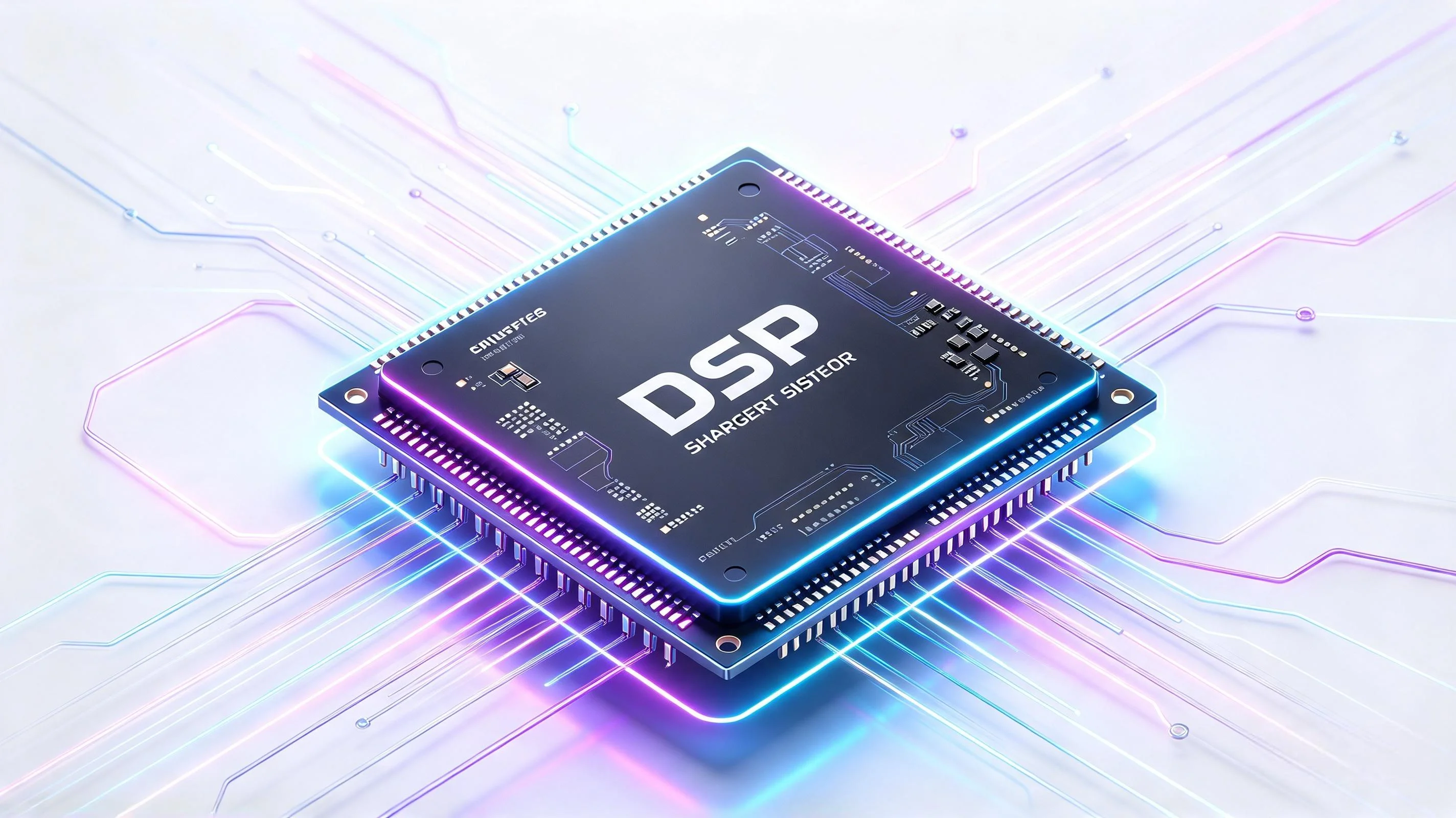
Have you ever found yourself in an awkward situation where, during a high-converting sales livestream in Ho Chi Minh City or a fun family karaoke session in Hanoi, the microphone suddenly emits a harsh, piercing "distorted screeching and howling" sound? Or despite trying your best, your voice through the speaker still sounds thin, dry, and lacking warmth?
The reason lies not only in your singing skills but also depends heavily on the audio processing technology behind the equipment. In the modern audio industry, the DSP chip (Digital Signal Processor) serves as the "brain" that defines the difference between an ordinary device and a high-end audio product.
So, what is a DSP circuit? What role do DSP chips on portable speakers and sound cards play in eliminating howling noises and elevating vocal quality? How can you master microphone anti-feedback tuning techniques most effectively at home? Let's unlock the details with ZANSONG in the article below!
1. What is a DSP Circuit? Working Principle on Portable Speakers and Sound Cards
What is a DSP Circuit?
DSP stands for Digital Signal Processor. A DSP circuit is a specialized microprocessor designed to receive, analyze, transform, and optimize digital audio signals in real time with ultra-fast speed.
While traditional analog audio circuits tune sound using capacitors and mechanical potentiometers (which easily cause distortion and background noise), DSP circuits process signals using complex mathematical algorithms. This allows precise control over every frequency band (Bass, Mid, Treble), filtering out noise and reproducing the most authentic soundscape.
Working Principle of DSP in ZANSONG Audio Equipment
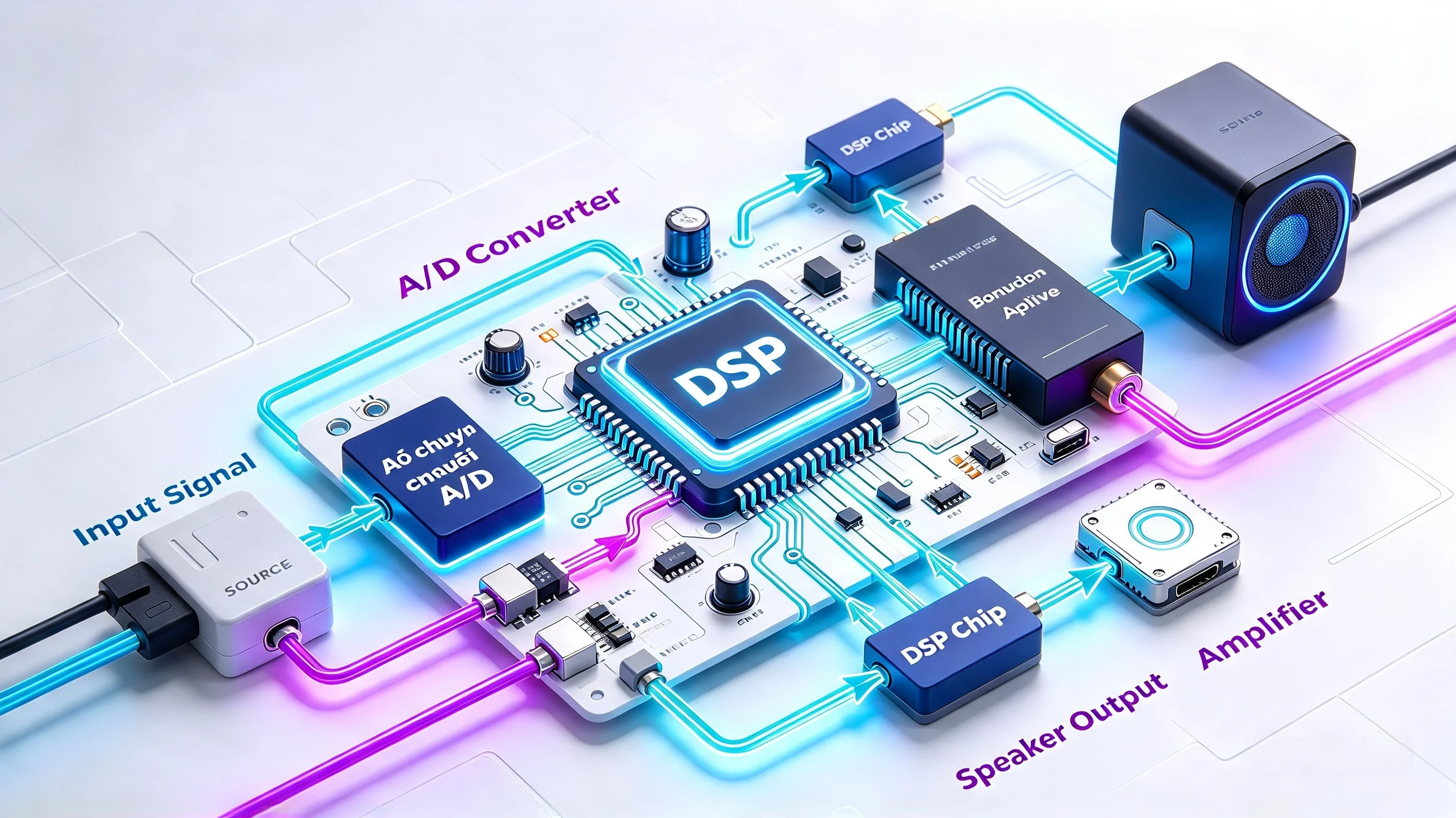
When you speak or sing into the microphone, the analog sound wave signal is converted into a digital signal (A/D Conversion). At this point, the integrated DSP chip in ZANSONG STREAM sound card series (such as X5, X7, V9...) or ZANSONG PLAY portable karaoke speakers (such as S80, S89, S99) executes the following processing steps:
-
Frequency Analysis: Separates voice/singing from ambient noise.
-
Equalization (EQ): Automatically compensates for missing frequency bands, adding warmth to Bass and clarity to Treble.
-
Effects Processing (Reverb/Echo): Creates deep spatial effects, making vocals sound more effortless and resonant.
-
Reverse Conversion (D/A Conversion): Outputs cleanly processed audio signals to speakers or monitoring headphones.
2. Outstanding Benefits of DSP Chips: Microphone Anti-Feedback and Vocal Optimization
Thanks to DSP technology, ZANSONG's new generation of audio equipment completely eliminates the two biggest "pain points" for users in Vietnam: harsh screeching feedback and thin, off-key vocals.
A. Superior Anti-Feedback Capability
Microphone howling occurs when sound emitted from the speaker is fed back into the microphone, creating a signal loop that is continuously amplified across high frequency ranges.
DSP circuits feature intelligent frequency scanning algorithms. The moment a frequency band shows abnormal feedback signals (about to howl), the DSP chip automatically cuts or reduces the amplitude of that specific band within milliseconds. As a result, howling is completely suppressed before human ears can even register it, while the entire audio spectrum of your vocals remains perfectly intact.
The ZANSONG VOICE wireless handheld microphone series (V21, ZS30, V26, V28...) is equipped with modern audio processing chips, allowing you to move around confidently and sing near speakers without fearing interruptions to the fun.
B. Voice Optimization and Enhancement (Voice Tuning)
Not everyone is blessed with a naturally powerful voice. A DSP chip acts as a silent "vocal assistant":
-
Warming and Enunciating Vocals: The DSP algorithm automatically smooths sound edges, ensuring soft speech remains clear and audible without strain. Combined with the karaoke-grade wooden enclosure design of the ZANSONG PLAY series, the output sound is warm and possesses superior depth compared to generic plastic speakers on the market.
-
One-click Smart DSP Functions: On the ZANSONG STREAM sound card line, the DSP chip enables extremely simple controls for non-technical users:
-
One-click Dodge (Auto Ducking): Automatically lowers background music volume when you speak, making it ideal for e-commerce livestreams in Ho Chi Minh City or Hanoi.
-
One-click Noise Reduction: Filters out fan noise, traffic, or ambient noise with just one button press.
-
One-click Original Sound Cancellation: Quickly removes vocals to extract karaoke backing tracks.
-
C. Ultra-low Latency (<20ms) for Smooth Livestream Sessions
When recording short videos or livestreaming, slow audio processing causes lip-sync delay (video out of sync with audio). The high-speed DSP chip on ZANSONG VOICE lavalier microphones (K21, K31, K50, S30) compresses and transmits data with an ultra-low latency of under 20ms, ensuring perfect audio-video synchronization.
3. Guide to the Most Effective At-Home Microphone Anti-Feedback Tuning
Even with DSP chips built-in, mastering microphone anti-feedback tuning techniques will help you unlock 100% of your speaker or sound card's performance. Here are expert-approved adjustment steps:
Step 1: Spatial Positioning Adjustment (The Golden Rule)
-
Never point the microphone capsule directly at the speaker face: Always stand behind or to the side of the portable speaker.
-
Maintain a Safe Distance: Stand at least 2m to 3m away from the speaker. With ZANSONG VOICE lavalier mics, thanks to 360-degree omnidirectional pickup and a stable connection range of 20m - 30m, you can move freely without standing close to the transmitter.
Step 2: Balance Gain / Master Volume Properly
-
Excessive microphone gain is the leading cause of howling. Set the Microphone Volume at around 60% - 70%.
-
If louder audio is required, increase the Master Volume on the speaker rather than cranking up the microphone gain.
Step 3: Fine-Tune HI (Treble) and MID Frequencies
-
Treble (High Frequencies): This range is most prone to generating harsh screeching. If you hear sharp sibilance or whistling, gently turn the Treble/HI knob counter-clockwise to the 10 o'clock - 11 o'clock position.
-
Mid (Mid Frequencies): Setting Mid too high causes low droning or boxy hums. Keep the Mid knob at a balanced 12 o'clock position.
-
Bass (Low Frequencies): Set the Bass knob between 12 o'clock and 1 o'clock to lend warmth to vocals without causing muddy low-end rumble.
Step 4: Leverage One-Touch DSP Anti-Feedback Features
-
On ZANSONG STREAM livestream sound cards (such as X5, X7), always activate the Noise Reduction button at an appropriate level so the DSP chip actively scans and removes parasitic noise frequencies.
-
Use all included ZANSONG anti-feedback accessories, such as foam windscreens and anti-roll rings, to minimize harsh air blasts directly hitting the microphone capsule.
4. Choosing Genuine ZANSONG DSP-Integrated Audio Equipment in Vietnam
In the Vietnamese market, the demand for home karaoke entertainment and online content creation across major cities like Hanoi, Ho Chi Minh City, and Da Nang is booming. Investing in audio equipment powered by a smart DSP chip is a wise choice that saves time, cuts costs, and elevates your overall experience.
ZANSONG proudly delivers a comprehensive audio ecosystem optimized with DSP technology for Vietnamese consumers:
-
Livestream Sound Card Series: Featured models like X5, X7, V9, F998, SK300 integrate 48V XLR ports, OTG Type-C ports for crystal-clear digital audio transmission, versatile voice-changing effects, and one-touch DSP noise filtering.
-
Portable Karaoke Speaker Series: Models like S80, S89, S99 feature premium MDF wooden enclosures, dual MP3/WAV/WMA decoders, and DSP audio balancing chips, delivering powerful deep bass and soaring vocals akin to a professional karaoke room.
-
Wireless Microphone Series: Handheld mics (V21, ZS30, V26, V28) and lavalier mics (K31, K50, S50) utilize DSP circuits for noise reduction, anti-feedback, and 2.4GHz transmission with latency under 20ms.
CONCLUSION
Understanding what a DSP circuit is and mastering proper microphone anti-feedback tuning techniques will give you total control over any audio environment—from cozy family gatherings to high-traffic, professional livestreaming sessions.
With our brand promise "Bringing clear, durable, and easy-to-use audio to every home", ZANSONG is always by your side on the journey to master every melody. Contact authorized ZANSONG dealers in Hanoi, Ho Chi Minh City, and nationwide today to experience the power of next-generation DSP technology firsthand!
